
What Does “Energy Healing” Actually Mean?
If I had a dollar for every time someone said “energy healing” to me with a slightly skeptical tilt of the head, I could probably retire early. And honestly? I get it. It’s one of those phrases that gets thrown around so much it’s almost lost its meaning — used interchangeably for everything from Reiki to crystals to someone waving their hands and calling it a day.
So let’s actually talk about what it means.
The Basic Idea
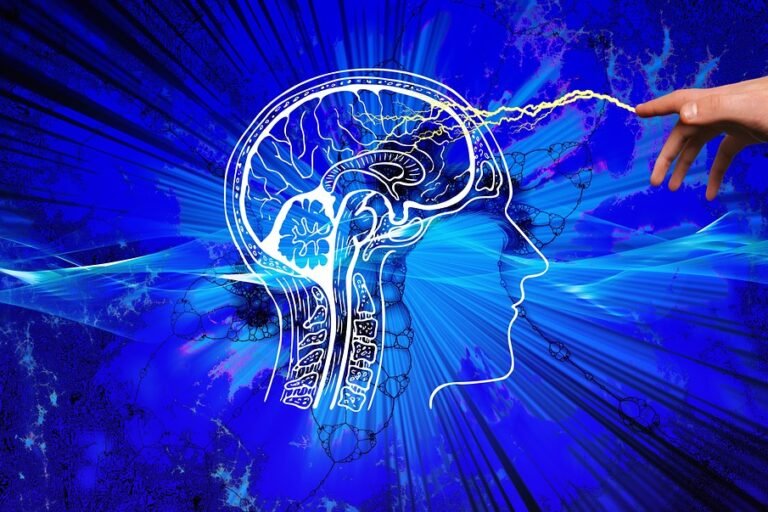
At its core, energy healing is built on a premise that’s been part of healing traditions for thousands of years, long before the term “energy healing” existed: that the human body isn’t just a physical machine made of bones, organs, and chemistry. It’s also an energetic system. Traditional Chinese Medicine calls it qi. In yogic traditions, it’s prana. In Hawaiian Huna, it’s mana. Different names, same underlying idea — that there’s a subtle, vital energy that animates us, flows through us, and can become blocked, depleted, or disturbed.
When that energy is flowing well, we tend to feel it as vitality, clarity, ease. When it’s not — when it’s stagnant, or there’s a blockage from an old injury, an unresolved emotion, chronic stress, a belief we’ve been carrying since childhood — that’s often where we start to feel it show up. Sometimes as physical tension or fatigue. Sometimes as anxiety we can’t quite explain. Sometimes as just being stuck.
Energy healing, broadly, is any practice that works directly with that system rather than only with the physical body. Reiki, Pranic Healing, therapeutic touch, qigong — they’re all under this umbrella, even though the techniques look different from one another.
What It’s Not
I want to be clear about something, because I think this is where a lot of the skepticism comes from fairly: energy healing isn’t meant to replace medical care, and any practitioner worth their salt will tell you that. It’s not a substitute for your doctor, your medication, or your treatment plan. What it is, in my experience both as a practitioner and as someone who has been on the receiving end of it more times than I can count, is a complement. It works on a different layer than conventional medicine does — supporting the nervous system, helping the body find its way back to a state where it can actually do its own healing work.
I also want to gently push back on the idea that energy healing has to look mystical or dramatic to be real. Some of the most profound sessions I’ve done — for clients and for myself — have been quiet. Not much visibly “happens.” But something shifts.
How I Think About It
When I work with a client, I’m not thinking of energy as some vague, abstract concept. In Pranic Healing specifically, we work with the idea that the body has an energy field — an aura — that can be assessed, cleansed, and re-energized in fairly systematic ways. It’s methodical. There’s a process. That structure was actually part of what drew me to it initially, coming from a background where I wanted something I could learn, practice, and refine, not just something I had to take entirely on faith.
That said, I don’t think you need to fully intellectually understand energy healing for it to work, any more than you need to understand the biochemistry of a pharmaceutical for it to help you. What I’d encourage instead is curiosity. Notice how you feel before a session and after. Notice patterns over time. The body tends to tell the truth, even when the mind wants an explanation first.
Why It Matters Right Now
I think part of why energy healing has moved from the fringes into more mainstream conversation is that people are tired of only being treated symptom by symptom. There’s a growing hunger to be seen as a whole person — mind, body, and yes, energy — rather than a collection of parts to be managed separately. That’s not a rejection of modern medicine. It’s an addition to it.
If you’re new to this and still feel unsure, that’s completely fine. You don’t have to arrive as a believer. You just have to be willing to notice what you notice.