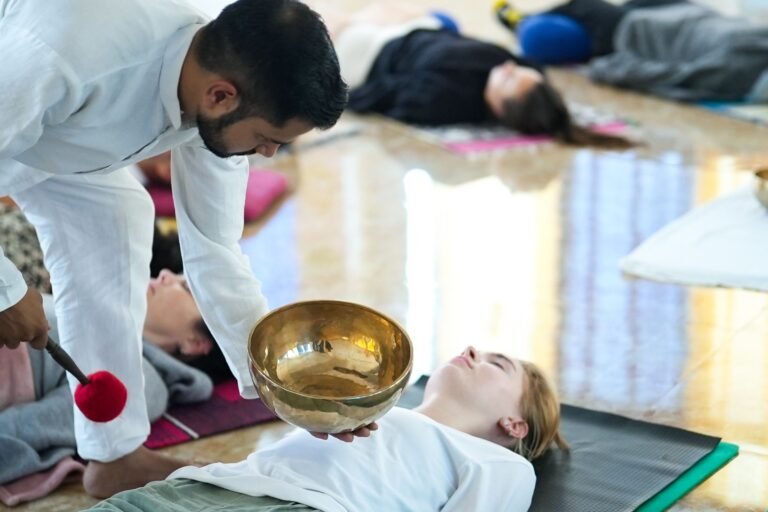

Of all the modalities I offer, QHHT is probably the one that generates the most curiosity — and the most questions before someone ever books. So let’s walk through it properly, start to finish, so you know exactly what you’re stepping into.
What QHHT Actually Is
QHHT stands for Quantum Healing Hypnosis Technique, developed by Dolores Cannon over decades of hypnotherapy work. At its core, it’s a form of deep hypnosis designed to guide a person past the conscious, everyday mind and into a state where they can access what Dolores called the subconscious — a deeper layer of awareness that many describe as having access to information beyond ordinary conscious memory. This can include past life experiences, but it’s really about accessing a wiser, more expansive part of yourself and asking it questions.
Before the Trance: The Interview
A QHHT session is a full experience, typically running four to five hours, and most of that time isn’t actually spent in hypnosis. We start with a long conversation — sometimes an hour or more — where I get to know you. Your history, your health, your relationships, recurring dreams or patterns, and most importantly, the questions you want to bring into the session. This part matters enormously. The quality of the questions often shapes the quality of what comes through.
The Hypnosis Itself
Once we’ve talked, we move into the hypnosis portion. I guide you through a relaxation process and then a series of visualizations designed to gently move you past ordinary waking consciousness into a much deeper state. Despite what movies might suggest, you remain in control the entire time — you’re not unconscious, you’re not vulnerable, and you can’t be made to do or say anything against your will. It’s more like a very focused, very relaxed state of attention.
From there, many people find themselves describing scenes, places, or experiences that feel vivid and real, sometimes identified as past lives, sometimes as symbolic material. Eventually, we invite what Dolores referred to as the subconscious to come forward directly — and this is often the most striking part of the session. People frequently describe this presence as wise, loving, and remarkably direct. It’s often where the real answers arrive.
Asking the Questions
This is the part clients tend to most look forward to. Once the subconscious is present, we go through the list of questions gathered in the interview — anything from physical symptoms to relationship patterns to life direction. It’s not uncommon for physical or emotional issues to be addressed directly in this part of the session, sometimes with noticeable shifts felt in the body in real time.
Coming Back
After the questions are complete, I guide you back to full waking awareness gradually. Most people remember at least some, often much, of what came through — though it’s also normal to only recall fragments. That’s part of why every session is recorded, so you can revisit it afterward and absorb what may not have fully landed the first time.
What to Expect Emotionally
Every session is different, and I never walk in with an expectation of what someone “should” experience. Some sessions are dramatic and vivid. Others are quiet and subtle. Neither is more valid than the other. What I’ve seen consistently, though, is that people leave with something — a shift in perspective, an answer they’d been circling for years, a sense of peace about something that had felt unresolved. Not because I did anything to them, but because they accessed something in themselves that was there all along.
If you’re curious about QHHT, come with openness rather than expectation. That’s really the only preparation you need.