Reiki is usually one of the first words people encounter when they start exploring energy healing, and for good reason — it’s one of the most widely practiced and widely known modalities in the world at this point. But familiarity with the word doesn’t always mean familiarity with what actually happens in a session, so let’s slow down and look at it properly.
Where It Comes From
Reiki originated in Japan in the early 20th century, developed by Mikao Usui. The word itself breaks down into “rei” (universal) and “ki” (life force energy) — so at its root, Reiki simply means universal life energy. The practice is built on the idea that this energy can be channeled through a practitioner’s hands to support healing in another person, or in yourself.
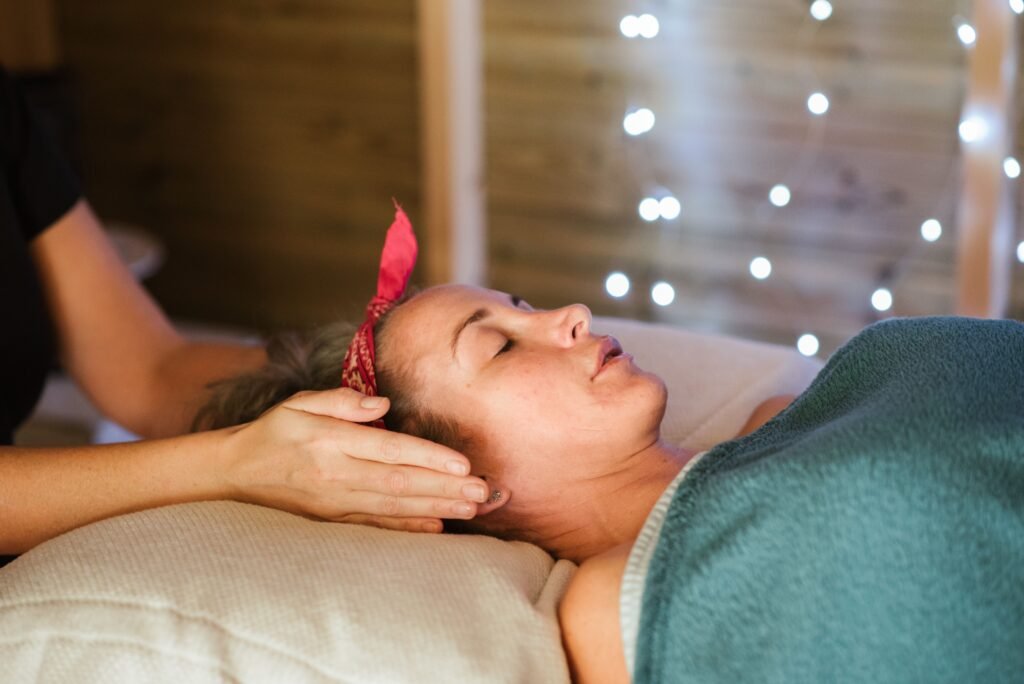
It’s a gentle modality. There’s no manipulation of the body the way there is in massage, no diagnosis, no herbs or tools. Just hands, either placed lightly on or held just above the body, and the intention to allow energy to flow where it’s needed.
What Actually Happens in a Session
If you’ve never received Reiki, here’s roughly what to expect: you stay fully clothed, lying down or seated comfortably. The practitioner moves through a series of hand positions, often starting near the head and working down the body, though the sequence can vary. Sessions typically run somewhere between thirty minutes and an hour.
Most people describe the experience as deeply relaxing — a warmth or subtle tingling under the practitioner’s hands, sometimes emotional release, sometimes simply falling into a state close to sleep. It’s common to feel like time passed differently than you expected. I’ve had clients who were certain only ten minutes had gone by when it had been closer to forty-five.
What you won’t experience is anything dramatic or forceful. Reiki tends to work quietly, which I think is part of why it’s sometimes underestimated by people who haven’t tried it.
What It’s Good For
In my experience, Reiki shines in a few particular areas: stress and anxiety reduction, supporting the body through recovery from illness or surgery, easing physical tension, and generally helping someone’s nervous system shift out of a fight-or-flight state and into something more regulated. It’s also wonderful as ongoing maintenance — not something you only reach for in crisis, but something that can be part of a regular rhythm of care.
I’ll also say this clearly: Reiki is not a replacement for medical treatment. It works well alongside it — supporting the body’s own capacity to heal rather than treating a specific diagnosis directly.
Why I Think It Endures
There’s something about Reiki’s simplicity that I find genuinely moving, even after years in this field. It doesn’t require you to believe anything in particular. It doesn’t require elaborate ritual. It’s just presence, intention, and energy — and yet people consistently walk away from sessions feeling different, lighter, more themselves. That’s not nothing.
If you’re curious and haven’t tried it yet, I’d encourage you to go in without expectations. Let it be simple. Let your body tell you what it needed.